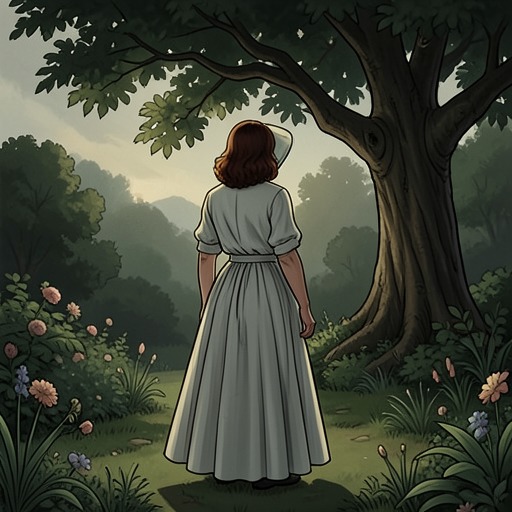
“Beauty remains, even in misfortune”
Diary of Anne Frank“Beauty remains, even in misfortune” expresses Anne Frank’s conviction that noticing beauty can help a person recover happiness and balance without pretending that suffering does not exist. In her diary, the phrase answers her mother’s advice to dwell on the world’s suffering and be grateful not to share it: Anne instead urges attention to nature, to happiness within oneself, and to the beauty that persists around and within people.
The disagreement behind the expression
Anne sets out the contrast directly. Her mother’s counsel is to think about the suffering in the world and feel thankful not to be part of it; Anne’s is to go outside, enjoy the sun and nature, and try to recapture happiness. The disagreement turns on more than where to direct one’s attention. Anne asks what happens when a person becomes part of the suffering: if gratitude depends on being spared, she reasons, that outlook leaves the sufferer with no sustaining answer.
The expression does not erase the misery Anne acknowledges. Rather, it rejects the idea that misery must occupy the whole field of vision. Looking for beauty, she argues, reveals more happiness and helps a person regain balance. Her formulation is conditional and active: beauty remains, but it must be sought and noticed.
Nature as consolation
The diary develops this view through Anne’s recurring attention to the outdoors. She describes the sky, sunshine, and cloudless weather as sources of happiness, and reflects that being alone with the sky, nature, and God can bring comfort to someone frightened, lonely, or unhappy. Nature offers solace whatever the circumstances, she believes, because its beauty and simplicity remain available to perception even amid distress.
This consolation is not merely private escape. Anne connects personal happiness to its effects on others: a happy person, she writes, can make other people happy. Courage and faith, in turn, become resources against a life defined by misery. The expression therefore links the act of finding beauty to a small but outward-reaching ethic of resilience.
Hope amid loss and persecution
Other diary entries give the idea a harder context. After her grandmother’s death, Anne remembers that she still loves her and notes that a candle was lit for her at the birthday celebration meant to make up for earlier birthdays marked by illness and war. During Hanukkah in hiding, the residents exchange a few small gifts and light candles for only ten minutes because candles are scarce; singing the song matters even under that constraint. Such moments do not undo loss or deprivation. They show how rituals, remembrance, and shared acts can preserve affection and meaning within them.
Anne’s reflections on suffering also extend beyond her own immediate circumstances. Seeing Hanneli Goslar in a dream, she feels the force of Hanneli’s helplessness and recognizes that she had previously been absorbed in her own problems. She wonders why she has been chosen to live while Hanneli may die, and hopes that if Hanneli survives the war she can welcome her and make amends. Here, attention to another person’s suffering complicates any simple call to look away from pain: Anne’s appeal is to find beauty without becoming indifferent to those who suffer.
Faith, Jewish identity, and the limits of comfort
The expression sits alongside Anne’s unsettled relationship with religious practice. Her father encourages her to read German writers and plans to read plays by Goethe and Schiller with her; her mother gives her a prayer book, but Anne says the prayers sound beautiful while meaning little to her. Elsewhere, she invokes God as a source of comfort and reflects on whether God has made the Jewish people as they are and will lift them up again. Her diary holds these positions together without resolving them into a single, uncomplicated statement of faith.
That tension becomes especially stark when the residents are reminded that they are Jews without rights, confined to one place and burdened with obligations. Anne’s response affirms that they cannot cease to be Jewish, even if they are also Dutch, English, or something else; she imagines that their religion might teach goodness and that the Jewish people may endure. In this setting, the persistence of beauty is not a promise that hardship will end quickly or that suffering is deserved. It is a way to retain hope and human feeling under conditions designed to deny both.